Buried Brilliance: How America's Doctoral Research Gets Lost Before It Can Change the World
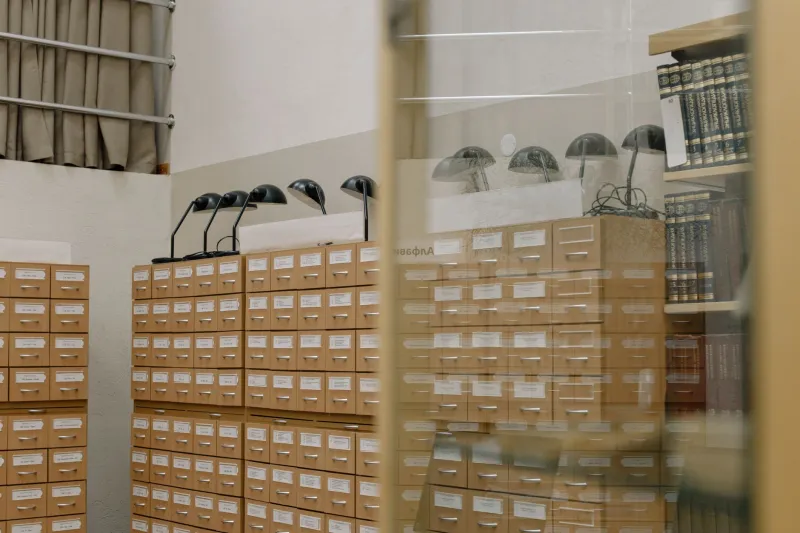
Somewhere in the digital repository of a mid-sized American research university, a 300-page dissertation sits untouched. It was submitted four years ago by a PhD candidate who spent half a decade collecting original field data, developing a novel analytical framework, and producing findings that, under different circumstances, might have reshaped a corner of her discipline. Since submission, it has been downloaded eleven times. It has been cited once — by the author herself, in a conference paper that was never published.
This is not an anomaly. It is, by most accounts, the norm.
The United States produces more doctoral graduates than almost any other nation on earth. According to the National Science Foundation, American universities conferred approximately 55,000 research doctorates in a single recent academic year alone. Each of those degrees required an original dissertation. Each dissertation represented a substantial contribution — in theory, at least — to human knowledge. Yet the overwhelming majority of that work will never meaningfully circulate beyond the institution where it was produced.
Understanding why requires looking at a system that was never designed with discoverability in mind.
The Architecture of Invisibility
When a doctoral candidate completes their dissertation, the path to submission typically leads to one of two destinations: ProQuest Dissertations & Theses Global, the dominant commercial database for American doctoral work, or an institutional repository maintained by the degree-granting university. In many cases, it goes to both. In theory, this sounds like adequate infrastructure. In practice, it creates a series of compounding access problems.
ProQuest's database holds millions of dissertations and is the most comprehensive archive of American doctoral research in existence. But full-text access requires either an institutional subscription — which many smaller colleges and independent researchers do not hold — or individual purchase fees that can reach forty dollars or more per document. For a researcher trying to survey a field, the cost of reading a dozen relevant dissertations becomes prohibitive almost immediately.
Institutional repositories, meanwhile, vary enormously in quality, metadata standards, and search functionality. A dissertation deposited at one university may be discoverable through Google Scholar; another, submitted under a slightly different set of repository configurations at a different institution, may return no search results at all. The lack of standardization across American higher education means that discoverability is largely a matter of institutional accident rather than deliberate design.
Why Dissertations Deserve a Larger Audience
The consequences of this invisibility extend beyond the careers of individual doctoral graduates. Dissertations occupy a genuinely distinctive position in the research ecosystem. Unlike journal articles, which are often compressed, stripped of methodological detail, and shaped by editorial conventions, dissertations are permitted — indeed, required — to be comprehensive. They contain full literature reviews, complete datasets, extended methodological justifications, and negative results that would never survive peer review at a traditional journal.
That last point matters more than it might initially appear. The problem of publication bias — the tendency of academic journals to favor positive, statistically significant findings over null results — is well documented and widely acknowledged as a distorting force in science. Dissertations, by contrast, must report what the researcher actually found. They are among the few venues in academic life where a candidate cannot simply bury an inconvenient result.
For fields that depend on cumulative empirical evidence, access to dissertation-level data could meaningfully improve the quality of systematic reviews and meta-analyses. For emerging disciplines still establishing their methodological foundations, the detailed procedural accounts in doctoral theses represent a kind of institutional memory that published literature rarely preserves. And for graduate students beginning their own research, a well-indexed dissertation database would be among the most valuable tools available — a direct window into how experienced researchers actually work through a problem from inception to conclusion.
The Open Access Gap in Graduate Research
The open access movement has made significant inroads in transforming how journal articles are published and distributed. Federal mandates, institutional policies, and the proliferation of preprint servers have collectively shifted norms around article-level sharing in ways that would have seemed optimistic a decade ago. Dissertations, however, have largely been left behind in this transformation.
Some universities have adopted open access dissertation policies, requiring graduates to deposit their work in publicly accessible institutional repositories without embargo. The University of California system, MIT, and a growing number of other research institutions have moved in this direction. But adoption remains inconsistent, and embargo provisions — which allow candidates to delay public release, often to protect potential journal submissions or patent applications — can keep dissertations locked away for years after completion.
The embargo question reveals a genuine tension in dissertation policy. Doctoral candidates have legitimate professional interests in controlling the timing of their work's release. A dissertation that appears in full before its findings have been published in peer-reviewed venues can complicate journal submissions, since many publishers treat prior public availability as a barrier to acceptance. At the same time, extended embargoes — sometimes running five years or longer — effectively remove dissertation research from the scientific conversation at precisely the moment when it is most current and most relevant.
Emerging Efforts to Reverse the Trend
A number of initiatives are attempting to address the discoverability problem with varying degrees of reach and ambition. DART-Europe, though focused on European theses, has demonstrated that cross-institutional aggregation of doctoral research is technically feasible at scale. In the United States, the Networked Digital Library of Theses and Dissertations (NDLTD) has worked for decades to improve metadata standards and interoperability among institutional repositories, though its membership and impact remain uneven.
Google Scholar's indexing of dissertation repositories has improved discoverability for some institutions, and the Internet Archive has preserved copies of openly accessible theses that might otherwise be lost to link rot and repository migrations. Several discipline-specific databases have begun incorporating dissertation abstracts as standard practice, giving researchers at least a partial view into doctoral work even when full-text access remains restricted.
Perhaps most promisingly, a growing number of doctoral graduates are taking matters into their own hands. Platforms such as Academia.edu and ResearchGate, despite their own complicated relationships with copyright and institutional policy, have become informal repositories where researchers post their dissertations directly. Personal academic websites serve a similar function. These workarounds are imperfect and inconsistent, but they reflect a genuine demand among researchers for access to the full depth of doctoral scholarship.
The Cost of Continued Neglect
The failure to make doctoral research broadly accessible is, at its core, a policy failure — one that operates at the intersection of commercial database interests, inconsistent institutional practices, and a publishing culture that has historically undervalued dissertation-level scholarship. It is also, increasingly, a scientific efficiency problem. When original research cannot be found, it cannot be built upon. When findings sit unread in archives, they do not contribute to the cumulative progress that justifies the enormous public and private investment in doctoral education.
For the researchers at FreePaperDownload who rely on open access to conduct serious, thorough scholarship, the dissertation gap represents one of the more frustrating remaining frontiers. The work exists. In many cases, it is exceptional. The barriers keeping it from circulation are not technological — they are structural, commercial, and cultural.
Changing that will require deliberate action from universities, funding agencies, and the researchers themselves. The first step is acknowledging that a dissertation submitted and forgotten is not, in any meaningful sense, a contribution to science at all.