Paying to Stand on the Shoulders of Giants: How Citation Paywalls Are Strangling American Research
Science, at its most fundamental level, is a conversation. Each published study responds to those that came before it, corrects earlier assumptions, and extends the boundaries of what is known. This cumulative architecture — what Isaac Newton famously described as standing on the shoulders of giants — depends entirely on one precondition: that researchers can actually read the work they are building upon.
In twenty-first century America, that precondition is failing. And the consequences for scientific progress are far more severe than most outside the research community realize.
The Paradox at the Heart of Modern Science
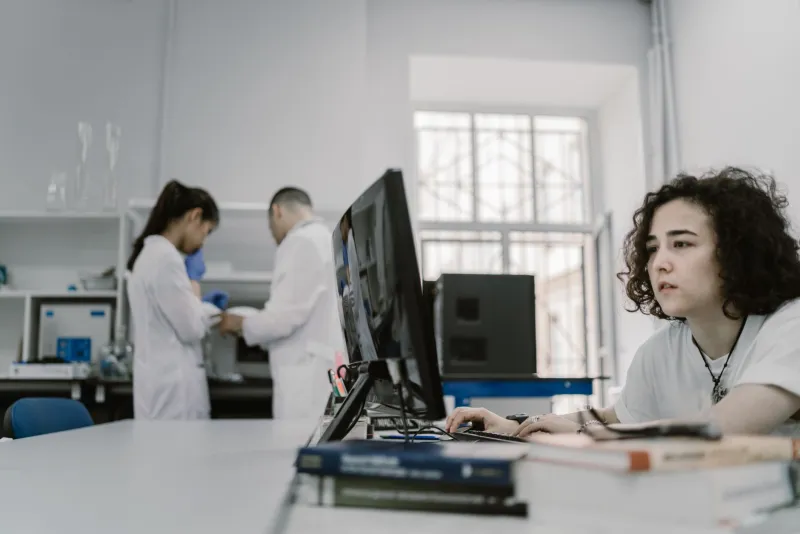
Consider the situation facing a biomedical researcher at a mid-sized public university in, say, Ohio or Tennessee. She has received a federal grant — taxpayer money — to investigate a promising treatment pathway for a chronic inflammatory condition. Her literature review identifies forty-three studies she needs to read carefully before designing her methodology. Sixteen of those papers are freely accessible. The remaining twenty-seven sit behind journal paywalls, each carrying an individual purchase price ranging from $30 to $49.
To access every paper she needs, she would spend upward of $1,000 out of pocket — or consume a significant portion of her institution's limited interlibrary loan budget, with delays of days or weeks per request. In many cases, she will simply proceed without reading those studies in full, relying instead on abstracts, secondhand citations, or educated inference.
This is not an edge case. According to surveys conducted by research advocacy organizations, the majority of American researchers — including those at well-funded institutions — regularly make decisions about which literature to pursue based on cost and availability rather than scientific relevance. The paywall does not merely inconvenience researchers. It actively shapes the direction of their work.
When Duplication Becomes the Default
One of the least-discussed consequences of restricted literature access is the epidemic of duplicated research. When scientists cannot determine what has already been established — because the establishing papers are inaccessible — they often repeat experiments that have already been conducted, sometimes reaching identical conclusions that were published years earlier.
A research team at a regional university in the Southwest spent fourteen months investigating the metabolic effects of a particular enzyme interaction, only to discover upon submission that a German research group had published nearly identical findings two years prior. The prior paper had been locked behind a subscription that the team's library did not carry. The interlibrary loan request, submitted early in the project, had been deprioritized due to budget constraints and never fulfilled.
Fourteen months. Two researchers' time. Federal grant funding. All of it spent reproducing knowledge that already existed — knowledge that, in many cases, had itself been produced with public money through grants from the National Institutes of Health or the National Science Foundation.
This scenario plays out across American research institutions with troubling regularity. The inefficiency is systemic, and its costs — measured in time, funding, and delayed medical or technological advancement — run into the billions of dollars annually.
The Hidden Productivity Tax
Researchers who spoke candidly about their daily workflows described a persistent, low-grade friction that paywall barriers introduce into what should be a fluid intellectual process. A molecular biologist at a large Midwestern research university described spending forty-five minutes on a single afternoon tracking down a 2019 paper through a combination of author email requests, preprint servers, and repository searches — time that, multiplied across a typical research week, amounts to a significant and invisible productivity drain.
"We don't talk about it much because it feels like complaining about something we're supposed to just manage," she said. "But the cognitive interruption alone — stopping your train of thought to figure out how to access a paper you need right now — is genuinely costly. And sometimes you just can't get it in time, so you make do."
Making do, in research terms, often means proceeding with incomplete information. It means designing studies without full awareness of methodological pitfalls that prior researchers already identified. It means literature reviews with systematic gaps that peer reviewers may or may not catch. It means scientific papers built on foundations that are, in some places, invisible to the authors themselves.
The Institutional Inequality Dimension
The paywall problem does not distribute itself evenly across American research institutions. Harvard, MIT, and the University of Michigan maintain subscription portfolios that provide broad — though still not complete — access to major journal databases. But the thousands of smaller public universities, community college research programs, historically Black colleges and universities, and independent research institutes operate with library budgets that cover only a fraction of what their faculty need.
This creates a structural advantage for well-resourced institutions that compounds over time. Research teams with fuller literature access design better studies, avoid more dead ends, and publish more efficiently. Their output attracts more funding, which expands their library access further. Meanwhile, researchers at underfunded institutions fall progressively behind — not because of any deficit in intellectual capacity, but because the informational infrastructure they require is priced beyond their reach.
The result is a research ecosystem in which the quality and efficiency of scientific work is substantially determined by institutional wealth rather than by the merit or importance of the questions being asked.
What Researchers Are Doing to Cope
In the absence of systemic solutions, American researchers have developed a patchwork of workarounds. Many post preprints of their own work to repositories like arXiv or bioRxiv before or alongside formal publication, making their findings freely available even when the journal version remains paywalled. Some maintain personal websites where they host author copies of their papers. Others participate in informal networks — sometimes called "invisible colleges" — where colleagues share PDFs directly upon request.
Legal author self-archiving, interlibrary loans, open-access repositories maintained by universities and federal agencies, and direct author contact remain the most reliable legitimate pathways to accessing restricted literature. Platforms that aggregate open-access content have also grown substantially in recent years, and federal mandates requiring public access to NIH-funded research have expanded the pool of freely available material.
But these solutions are partial, inconsistent, and place the burden of navigating a broken system squarely on the researchers who are already most pressed for time.
A System Designed Against Itself
The deepest irony of citation paywalls is that they undermine the very function academic publishing claims to serve. Journals position themselves as the custodians of scientific quality and the engines of knowledge dissemination. Yet by pricing access beyond the reach of many who need it, they throttle dissemination in favor of revenue extraction — often from the same public institutions and federal agencies that funded the research being sold back to them.
Until structural reform aligns the economics of academic publishing with the actual goals of science, researchers will continue paying — in dollars, in time, and in the quality of work they are able to produce — for access to the collective knowledge that should, by any reasonable measure, already belong to them.
For those navigating these barriers today, freely accessible repositories, open-access mandates, and resources like those catalogued on FreePaperDownload represent practical lifelines in an imperfect landscape. The conversation about fixing that landscape, however, is one the entire American research community needs to be having — loudly, and without waiting for permission.