The Invisible Archive: How Millions of American Doctoral Dissertations Are Failing to Reach the Researchers Who Need Them
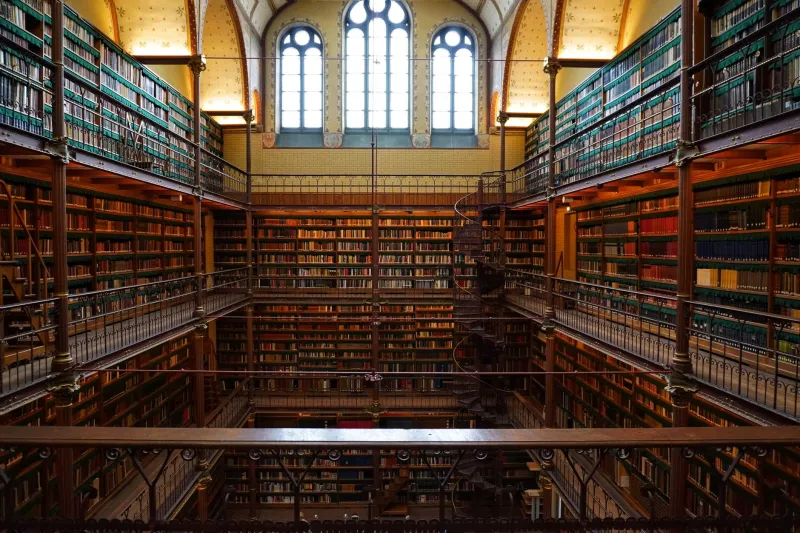
Somewhere in a university repository, a doctoral dissertation sits. It took its author five, perhaps seven, years to complete. It contains original data, a novel theoretical framework, and conclusions that no peer-reviewed journal has yet published. A handful of committee members read it. A librarian catalogued it. And then, in all practical terms, it vanished.
This is not an isolated story. It is, by most accounts, the default outcome for the majority of American doctoral dissertations — works that represent some of the most concentrated, methodologically rigorous original research produced anywhere in the country, yet which circulate in the broader scholarly conversation with almost no meaningful frequency.
The scale of this problem is difficult to overstate. ProQuest Dissertations & Theses Global, the largest aggregator of such works in the United States, currently indexes more than five million dissertations and theses. American universities collectively award well over 50,000 doctoral degrees each year. The archive grows constantly. The readership, by most available measures, does not keep pace.
A Resource Built for Invisibility
To understand why dissertations fail to circulate, it helps to understand how they are stored. Most American universities deposit doctoral dissertations into institutional repositories — digital archives maintained by university libraries that are technically accessible to the public but rarely optimized for discoverability. Metadata is frequently incomplete. Abstracts are often written for committee approval rather than for searchability. And because dissertations occupy an awkward category between unpublished manuscripts and formal publications, they tend to be excluded from the citation indexes and database algorithms that surface peer-reviewed articles in response to researcher queries.
The result is a structural invisibility. A researcher conducting a literature review on, say, rural healthcare access in Appalachia might spend hours in PubMed and Google Scholar without once encountering a 2019 dissertation from a regional state university that directly addresses her research question with three years of original fieldwork. The dissertation exists. It is technically accessible. But the infrastructure connecting researchers to relevant work was never designed with dissertations in mind.
Librarians who work directly with graduate collections describe the problem in consistent terms: discoverability is the central failure, and it compounds over time. A dissertation that receives no citations in its first two years after deposit is unlikely to receive citations in its fifth year. The absence of engagement becomes self-reinforcing.
The Citation Gap and Its Consequences
Citation counts function as a form of academic currency. Works that are cited attract further attention; works that are not cited remain peripheral. For doctoral dissertations, entry into this economy is structurally impeded from the outset.
Unlike journal articles, dissertations are rarely indexed in Web of Science or Scopus — the two databases most commonly used by researchers tracking citation patterns and identifying foundational literature. When a dissertation is eventually converted into a journal article or book chapter, the original work typically disappears from the citation trail entirely. The intellectual contribution is absorbed into a published form, but the dissertation itself — often containing far more detail, methodological transparency, and raw data than the published version — receives no corresponding credit.
This matters for the researchers who produced these works. For early-career scholars, citation counts influence hiring decisions, grant applications, and tenure reviews. A dissertation that goes uncited is not merely invisible; it is professionally inert. Several PhD holders in fields ranging from environmental science to comparative literature have described the experience of watching years of work fail to register in their disciplines, not because the research lacked merit, but because the channels through which scholarly work becomes known were never accessible to them.
What Gets Lost When Dissertations Go Unread
The consequences extend well beyond individual careers. Doctoral dissertations frequently contain research that simply does not exist anywhere else. Because PhD candidates are required to produce original contributions to knowledge, their dissertations often address niche questions, underserved populations, or methodological approaches that established journals are reluctant to publish. These are precisely the kinds of intellectual gaps that, if filled, could accelerate progress in their respective fields.
Consider the domains where this loss is most acute. In education research, dissertations frequently document local and regional program evaluations that never achieve the scale required for journal publication but contain findings directly applicable to policy decisions at the state level. In public health, doctoral candidates often conduct community-based studies in under-resourced areas that larger research institutions overlook. In the humanities, dissertations routinely contain archival discoveries and close readings that inform subsequent scholarship without ever being formally credited.
When these works go unread, the researchers who come after them repeat work that has already been done, fail to build on findings that could have accelerated their own inquiries, and occasionally arrive at conclusions that existing dissertations have already complicated or refuted. The redundancy is costly — in time, in funding, and in the opportunity cost of research that could have gone further.
Efforts to Close the Gap
Some institutions and organizations have begun to address the discoverability problem directly. The Networked Digital Library of Theses and Dissertations (NDLTD), an international consortium, has worked for decades to improve cross-institutional access to graduate research. Several major research universities have moved toward mandatory open-access deposit of doctoral dissertations, ensuring that works are not embargoed indefinitely and are indexed in publicly accessible systems.
Google Scholar, for all its limitations as a research tool, has done more than most specialized databases to surface dissertation content, largely because it crawls institutional repositories that more selective indexes ignore. For researchers who know to look, a targeted Google Scholar search will frequently return dissertation results that never appear in PubMed or JSTOR.
Librarians at several institutions have also begun experimenting with enhanced metadata projects — systematic efforts to improve the searchability of dissertation records by enriching abstracts, adding subject tags, and linking dissertations to related published works. Early results from these initiatives suggest that even modest improvements in metadata quality can meaningfully increase the discoverability of individual works.
What Researchers and Students Can Do Now
For researchers and students navigating this landscape, the practical implication is clear: the dissertation archive is a largely untapped resource that rewards deliberate effort. Searching ProQuest Dissertations & Theses directly — rather than relying on general academic databases — will surface relevant works that standard literature searches miss entirely. Most American university libraries provide free access to ProQuest for enrolled students and affiliated researchers.
Beyond ProQuest, DART-Europe provides access to European doctoral theses, and many individual university repositories are freely searchable without institutional affiliation. At FreePaperDownload, we consistently encourage researchers to treat dissertations as primary scholarly sources rather than supplementary background material — a shift in practice that can substantially enrich any literature review.
For PhD candidates preparing to deposit their own work, the choices made at submission have long-term consequences. Opting out of open-access deposit, accepting extended embargoes, or submitting minimal metadata all reduce the probability that a dissertation will ever reach an interested reader. The investment of years of research deserves, at minimum, the best possible conditions for discovery.
Rethinking What Academic Access Actually Means
The conversation about open access in American academia has focused, understandably, on journal articles — the primary currency of scholarly communication. But the dissertation archive represents a parallel crisis of access that receives far less attention. These are works produced at public and private universities, often with the support of federal research funding, by scholars who entered their fields with the explicit goal of advancing knowledge. That the infrastructure for sharing that knowledge remains so inadequate is not a technical inevitability. It is a policy failure, an institutional failure, and, for the researchers whose work sits unread in digital repositories across the country, a professional one as well.
The archive is not empty. It has never been more full. The question is whether American academia is willing to build the bridges that would allow that accumulated knowledge to actually move.
