Beyond Impact Factors: How American Universities Are Quietly Rewiring the Way Research Gets Valued
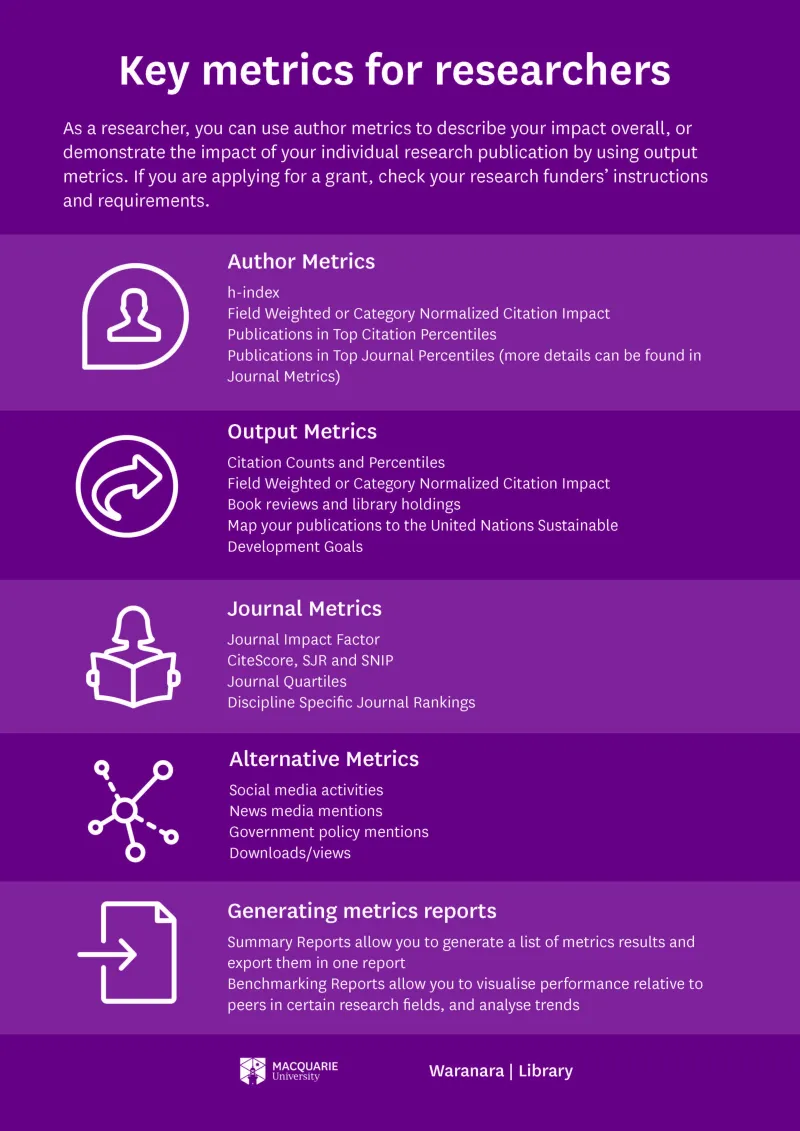
Photo: university research evaluation metrics academic publishing data analytics, via d329ms1y997xa5.cloudfront.net
For decades, a single number carried enormous weight in American academic life. The journal impact factor — a measure of how frequently a publication's articles are cited in a given year — functioned as a shorthand for prestige, influencing hiring committees, tenure boards, grant allocation panels, and promotion decisions at universities from Maine to California. Publish in a high-impact journal, the thinking went, and your career would follow an upward trajectory. Publish elsewhere, and you might struggle to be taken seriously.
That logic is now under serious pressure. Across the United States, a growing coalition of research institutions, funding bodies, and scholarly organizations is pushing back against the dominance of traditional bibliometrics. The movement is not yet a revolution, but it is far more than a fringe debate. What is emerging in its place is a richer, more contested, and arguably more democratic framework for understanding what makes research valuable.
The Problem With Counting Citations
The critique of impact factors is not new. Scholars have pointed out for years that citation counts tend to favor certain disciplines — particularly the natural sciences — over humanities, social sciences, and interdisciplinary fields. A groundbreaking paper in cultural anthropology may generate fewer citations than a routine study in molecular biology, not because it is less significant, but because citation cultures differ enormously across academic communities.
There is also the structural issue of access. Research published behind expensive paywalls naturally attracts fewer citations than work that is freely available. This creates a feedback loop that disadvantages scholars at under-resourced institutions, independent researchers, and academics in developing countries — and it skews the metrics in favor of those who already have access to elite publishing infrastructure.
Perhaps most critically, the impact factor measures the journal, not the individual article. A researcher who publishes one exceptional paper in a mid-tier journal may be contributing more meaningfully to their field than a colleague who publishes several unremarkable pieces in a prestigious outlet. Traditional metrics struggle to capture that distinction.
Altmetrics and the Rise of Article-Level Measurement
One of the most significant developments in this space is the emergence of article-level metrics, commonly grouped under the term "altmetrics." Rather than evaluating a journal as a whole, these tools attempt to measure the reach and engagement of individual pieces of scholarship. They track social media mentions, news coverage, policy document citations, download counts, and references in educational curricula — building a more granular portrait of how research actually travels through the world.
Platforms such as Altmetric.com and PlumX have gained traction in recent years, and a number of American universities have begun incorporating these scores into faculty review processes. The appeal is intuitive: a paper that is downloaded thousands of times, discussed on public health forums, and cited in a congressional briefing is clearly doing something meaningful, even if it has not yet accumulated a large formal citation count.
Critics of altmetrics raise valid concerns, of course. Online attention does not always correlate with intellectual rigor. Controversial or sensationalized research can generate enormous social media engagement without contributing meaningfully to a discipline. Any metric system can be gamed, and the companies that provide altmetric data are commercial entities with their own interests. These are legitimate cautions, and they underscore the importance of treating any single measure as one input among many rather than a definitive verdict.
Institutional Repositories and the Shift Toward Open Scholarship
Alongside the altmetrics conversation, American universities have been quietly building out institutional repositories — digital archives that collect, preserve, and freely distribute the scholarly output of their faculty and students. MIT, Harvard, the University of California system, and dozens of other institutions now maintain robust repositories that make research available to anyone with an internet connection, regardless of journal subscriptions.
These repositories serve a dual purpose. They preserve scholarship in a stable, accessible format, and they generate their own usage data — download counts, geographic distribution of readers, long-term citation patterns — that can complement traditional metrics. A paper archived in an institutional repository may accumulate a readership that a paywalled version never would, and that expanded reach has real implications for how we think about scholarly impact.
For researchers who want their work to be discovered and used — rather than simply published and shelved — institutional repositories represent a meaningful shift in how academic output is distributed. For platforms like FreePaperDownload, which are built on the principle that scholarly resources should be freely accessible, this trend reinforces a broader cultural movement toward open knowledge.
The San Francisco Declaration and Institutional Commitments
In 2012, a group of scientists and journal editors gathered in San Francisco and produced what became known as DORA — the Declaration on Research Assessment. The document called explicitly for an end to the use of journal-based metrics in hiring, promotion, and funding decisions, and urged institutions to evaluate research on its own merits rather than on the prestige of the venue in which it appeared.
Over the years since, DORA has attracted signatories from hundreds of American universities, research institutes, and funding agencies. The National Institutes of Health, the Howard Hughes Medical Institute, and numerous professional associations have endorsed its principles. Implementation varies considerably — institutional inertia is real, and changing the habits of tenure committees takes time — but the direction of travel is unmistakable.
What This Means for Students and Early-Career Researchers
For graduate students and early-career academics navigating a competitive landscape, the shift in metrics creates both opportunity and uncertainty. On one hand, the broadening of evaluation criteria means that research shared openly, engaged with by practitioners outside academia, or distributed through non-traditional channels can now count for something in formal review processes. A policy brief, a well-trafficked preprint, or a dataset downloaded widely by other researchers may carry weight in ways they previously did not.
On the other hand, the lack of standardization across institutions means that navigating expectations requires careful attention to local culture. A department at one university may enthusiastically embrace altmetrics, while a neighboring institution's tenure committee remains firmly committed to journal prestige. Researchers benefit from understanding both frameworks and being able to articulate the value of their work in multiple registers.
A More Honest Reckoning
The move beyond impact factors is, at its core, an attempt to make academic evaluation more honest. No single number can adequately capture the value of a piece of scholarship, and the pretense that it can has produced real distortions — in career incentives, in publishing behavior, and in what kinds of knowledge get produced and shared.
The emerging landscape is messier and more complex, but it is also more faithful to the actual diversity of ways that research matters. For a site like FreePaperDownload, whose mission rests on the conviction that scholarly knowledge should reach the widest possible audience, that complexity is not a problem to be solved. It is a sign that the academy is beginning to take seriously what it has always claimed to believe: that ideas matter, and that the measure of their value is found in how they change the world, not merely in the prestige of the journal where they first appeared.