Institutional Contradictions: How American Universities Quietly Restrict Access to Their Own Scholars' Research
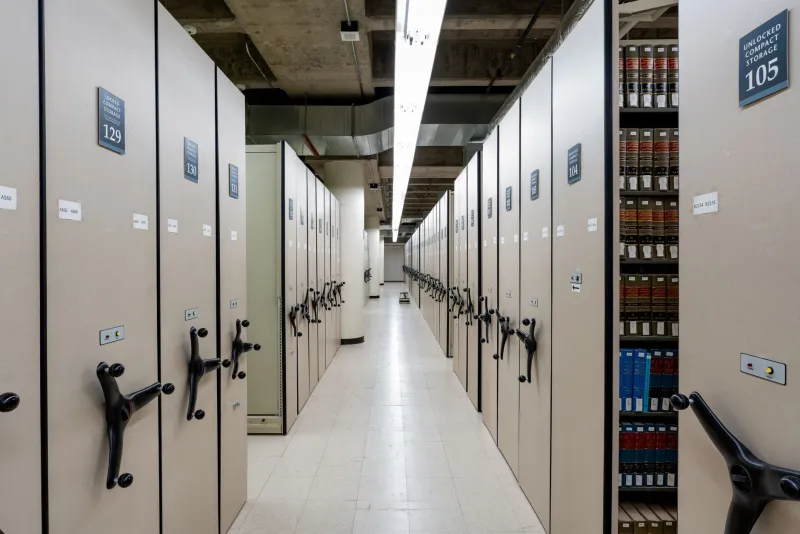
The language is familiar by now. Nearly every major American research university publishes a mission statement that invokes some version of the same promise: to generate knowledge for the benefit of society, to advance human understanding, and to make scholarly discovery broadly accessible. Carved into granite above library entrances or printed in bold type on institutional websites, these commitments sound unambiguous.
And yet, a significant portion of the research produced by faculty at those very institutions sits behind paywalls that most Americans cannot afford to breach. What is less frequently discussed is the degree to which universities themselves are responsible for that outcome — not merely as passive bystanders to commercial publishing practices, but as active participants in a system that prioritizes institutional reputation over genuine public access.
The Institutional Repository Problem
Most large research universities in the United States operate what are called institutional repositories: digital archives designed to collect, preserve, and distribute the scholarly output of their faculty and graduate students. In theory, these repositories represent exactly what open-access advocates have long called for — a university-controlled infrastructure capable of making research freely available to anyone with an internet connection.
In practice, the picture is considerably more complicated.
Deposit rates at institutional repositories remain stubbornly low at many universities. Faculty participation is often voluntary, and without meaningful enforcement mechanisms, a substantial share of published research simply never makes it into these archives. At some institutions, fewer than a quarter of eligible papers are deposited in any given year. The repositories exist, the infrastructure is funded, and the stated policy supports open deposit — but the actual outcome falls far short of the promise.
Part of the explanation is administrative. Faculty workloads are heavy, and depositing papers into a university repository is one more task competing for limited time. But the more revealing issue is that many universities have chosen not to make deposit mandatory, even when they have the institutional authority to do so. That choice reflects a set of priorities that quietly contradicts the open-access rhetoric.
Publishing Contracts and the Waiver Culture
Since 2008, when Harvard's Faculty of Arts and Sciences adopted the first broad open-access mandate at a major American research institution, dozens of universities have passed similar policies. On the surface, these mandates appear to require faculty to make their work freely available through institutional repositories or other open channels.
The fine print, however, frequently tells a different story. Most of these policies include waiver provisions — mechanisms that allow individual faculty members to opt out of the open-access requirement for specific papers. While waivers were designed as a narrow safety valve for genuine edge cases, research on their use has found that they are often applied broadly and with little scrutiny. At some institutions, waiver request rates are high enough to render the underlying mandate largely symbolic.
Why do universities permit this erosion of their own policies? The answer points back to the publishing partnerships that many institutions have quietly cultivated. Commercial academic publishers — particularly the handful of large conglomerates that dominate the market — negotiate licensing agreements with universities that can include provisions discouraging aggressive open-access enforcement. Universities, dependent on access to those publishers' journal portfolios for their faculty and students, have strong financial incentives to avoid antagonizing these relationships.
The result is a structural conflict of interest that most universities decline to discuss publicly. The same institution that signs a big-deal subscription agreement with a major publisher and the same institution that announces an open-access mandate are, in many cases, working at cross-purposes with themselves.
Prestige Metrics and Their Perverse Incentives
Beneath the contractual arrangements lies a deeper driver: the American university's relentless orientation toward prestige rankings. The metrics that determine where a university stands in national and international rankings — research output, citation counts, grant revenue, faculty awards — are almost entirely mediated through the traditional commercial publishing system.
Publishing in high-impact journals, most of which remain subscription-based, is how faculty members build the kind of scholarly reputation that attracts grant funding, draws top graduate students, and earns tenure. Universities benefit directly from that reputational economy. A faculty member whose paper appears in a prestigious, paywalled journal generates more measurable prestige for the institution than one who publishes in a freely accessible venue, even if the research itself is of equivalent quality.
This creates a situation in which universities are institutionally incentivized to encourage faculty to publish in exactly the journals that restrict access to their work. Open-access venues, particularly newer ones without established impact factors, are often implicitly discouraged through promotion and tenure criteria that weight journal prestige heavily. The university's commitment to open access, in other words, competes directly with its commitment to its own rankings — and rankings tend to win.
The Funding Asymmetry
American universities also exercise considerable control over how research is funded internally, and those funding decisions carry their own access implications. When a university allocates discretionary research funds, travel grants, or internal fellowships, it rarely attaches open-access conditions to that support. Faculty who receive university funding to conduct research are generally free to publish in any venue they choose, including journals that will lock the resulting work behind a paywall indefinitely.
By contrast, federal funding agencies — the National Institutes of Health, the National Science Foundation, and others — have moved in recent years toward requiring open-access publication as a condition of grant awards. The Biden administration's 2022 memo directing federal agencies to eliminate embargo periods for publicly funded research represented a significant acceleration of this trend. The gap between federal funding policy and university funding policy is, therefore, substantial, and it reveals something about where institutional priorities actually lie.
What Genuine Commitment Would Look Like
None of this is to suggest that universities are acting in bad faith, or that administrators are indifferent to the open-access problem. Many genuinely support broader access in principle. The issue is structural: the incentive systems within which universities operate consistently reward behaviors that conflict with open dissemination, and changing those systems requires a willingness to absorb real costs — financial, reputational, and political.
Institutions that have moved most meaningfully toward genuine open access have typically done so through a combination of strong mandatory deposit policies with minimal waiver provisions, investment in high-quality open-access publishing infrastructure, and deliberate reform of promotion and tenure criteria to treat open-access publication as equally valuable to subscription-journal publication. Some universities have also adopted transformative agreements with publishers that shift the financial model away from reader-side paywalls.
These approaches require institutional courage, because they involve confronting entrenched publishing relationships and challenging the prestige metrics that universities have long used to measure their own success. They are also, notably, the exception rather than the rule.
The Accountability Gap
For students, independent researchers, and members of the public who encounter paywalls when trying to access research produced at institutions whose work is often supported by public tuition dollars and federal grants, the gap between university rhetoric and university practice is more than an abstract policy concern. It is a concrete barrier to information that affects academic work, professional practice, and informed civic participation.
Universities owe their various stakeholders — students, faculty, the broader public, and the government agencies that fund much of their research — a more honest accounting of why their research remains inaccessible, and what they are genuinely prepared to do about it. Mission statements that promise open knowledge while institutional policies quietly ensure the opposite are not a foundation for trust. They are a form of institutional double-speak that the academic community has tolerated for too long.